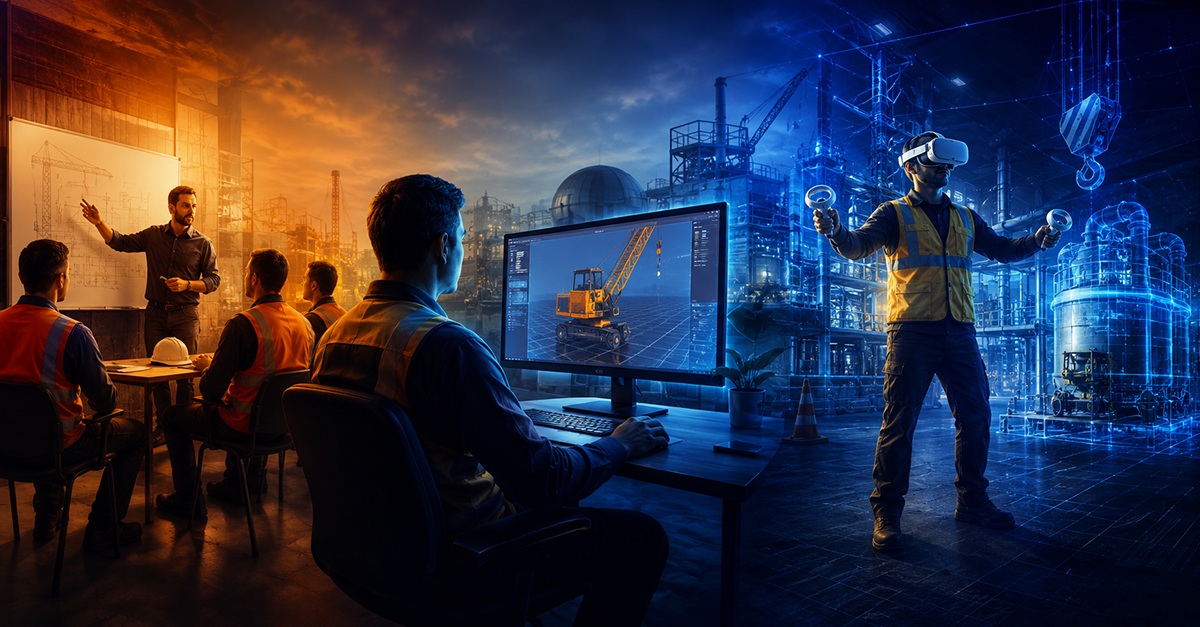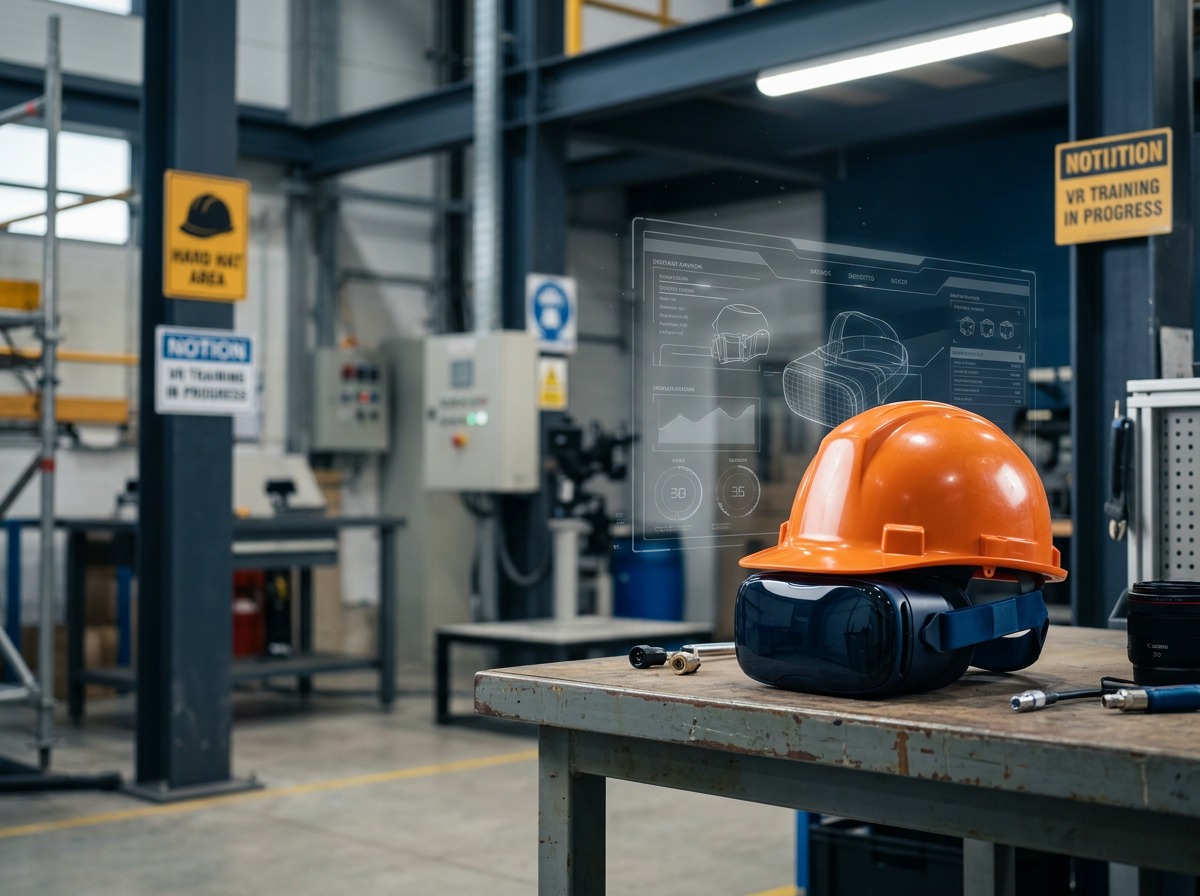
Workforce training in high-risk industries has followed the same formula for decades: classroom instruction, paper-based assessments, and on-the-job observation. It works — to a point. But the data increasingly shows that immersive training methods deliver measurably better outcomes across safety, retention, and cost.
The Retention Problem with Traditional Training
The Ebbinghaus forgetting curve is well-documented: learners forget approximately 70% of new information within 24 hours and up to 90% within a week without reinforcement. For safety-critical roles in construction, manufacturing, and utilities, that gap between learning and retention is where incidents happen.
Traditional eLearning and classroom sessions rely heavily on passive consumption — slides, lectures, and multiple-choice quizzes. These methods check a compliance box but rarely build the procedural memory that keeps workers safe on the job.
What the Research Shows
Multiple studies point to the same conclusion: active, scenario-based training produces better outcomes.
- PwC’s 2020 study on VR training effectiveness found that VR learners were 275% more confident in applying skills after training, compared to classroom learners — and completed training up to four times faster.
- Research on experiential learning consistently shows that active, hands-on practice produces significantly higher retention than passive methods like lectures or reading. Learners who practice by doing retain far more than those who only listen or watch.
- Studies on simulation-based safety training have found meaningful reductions in workplace incidents — with some programs reporting 30–50% fewer incidents compared to traditional classroom instruction alone.
The pattern is clear: when workers practice in realistic scenarios — whether through browser-based 3D simulations or fully immersive VR — they build muscle memory and decision-making skills that transfer directly to the job site.
Three Modalities, One Platform
The most effective training programs don’t rely on a single format. Different learning objectives call for different approaches:
Traditional eLearning remains the right tool for foundational knowledge, compliance documentation, and onboarding. It scales easily and meets SCORM requirements.
Web3D Simulations bring scenario-based practice to any device with a browser. Workers can rehearse procedures, identify hazards, and make decisions in realistic environments — without a VR headset.
Virtual Reality Training delivers the highest-fidelity experience for hands-on procedural training. When the task involves spatial awareness, physical procedures, or high-consequence decision-making, VR provides practice conditions closest to the real thing.
The Hard Hat Immersive Learning Platform™ unifies all three modalities in a single LMS, so organizations can match the right training format to each learning objective — and track completion and performance data across all of them.
Making the Business Case
Beyond safety outcomes, the economics favor immersive training at scale:
- Reduced travel and facility costs — VR and Web3D training can be delivered on-site or remotely, eliminating the need for centralized training facilities.
- Faster time to competency — Workers who train in simulated environments reach proficiency faster, reducing the ramp-up period for new hires.
- Lower incident rates — Every prevented incident avoids direct costs (medical, legal, regulatory) and indirect costs (downtime, morale, reputation).
- Audit-ready documentation — LMS-connected training automatically generates the completion records and assessment data that regulators require.
Where to Start
Organizations don’t need to replace their entire training program overnight. The most successful implementations start by identifying one high-risk procedure or compliance requirement, piloting immersive training for that use case, and measuring the results against their existing baseline.
From there, the platform scales. New courses, new modalities, and new teams can be added incrementally — all managed from the same system.
The data is clear. The technology is ready. The question for most organizations isn’t whether to adopt immersive training, but how quickly they can start.
Sharing insights on immersive workforce training, safety technology, and the future of enterprise learning at Hard Hat Immersive.