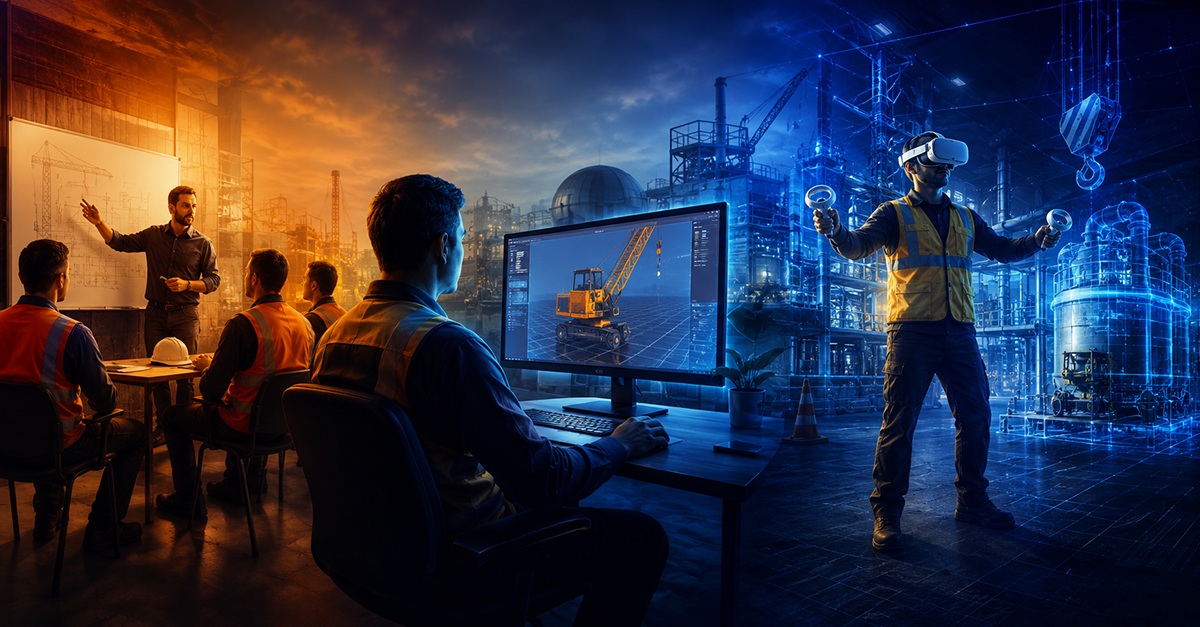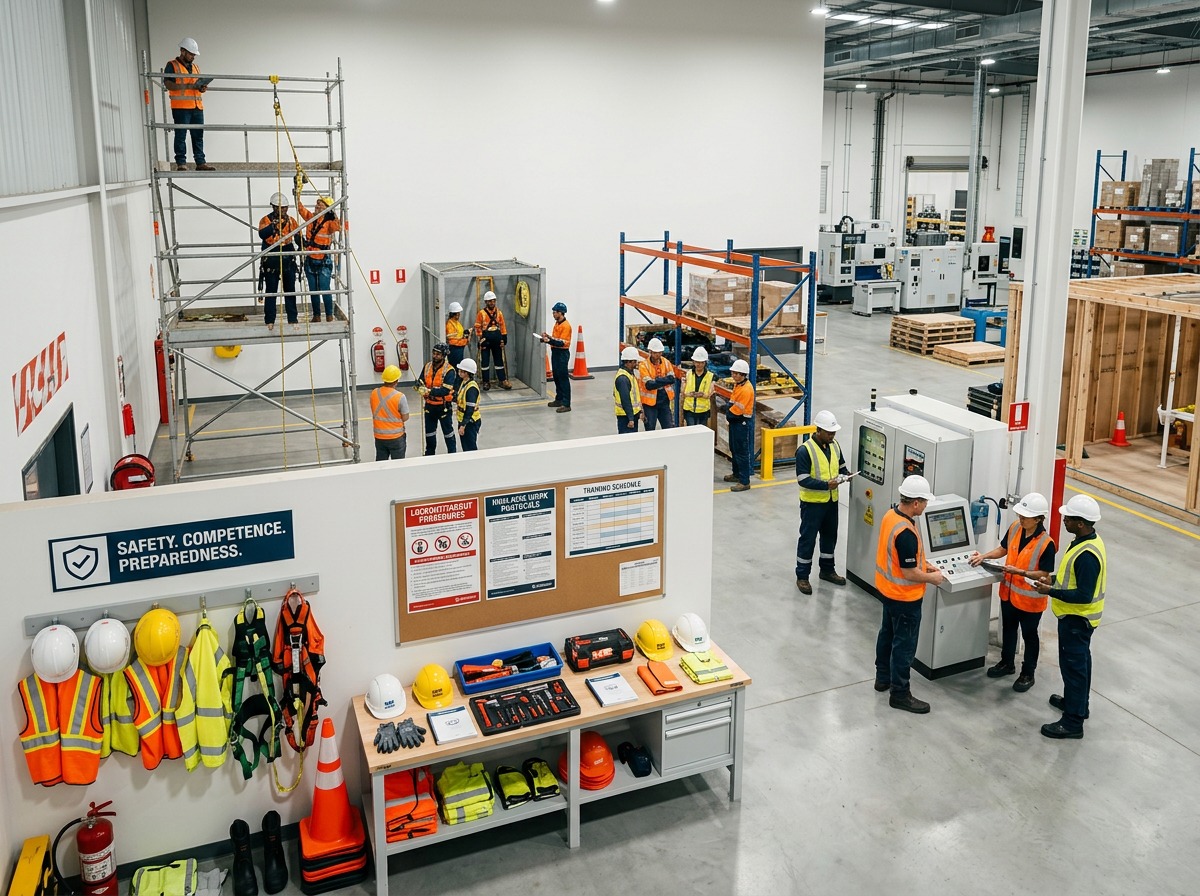
OSHA compliance training has been a constant in high-risk industries for decades. What’s changing is how that training is delivered, documented, and verified. As digital and immersive training methods mature, safety leaders are navigating a transition from legacy classroom-and-binder approaches to modern, technology-driven programs.
Here’s what’s driving the shift and what it means for your organization.
The Regulatory Landscape Is Evolving
OSHA doesn’t mandate specific training formats for most standards. The requirement is that workers receive effective training appropriate to their roles and the hazards they face. How that training is delivered — classroom, online, simulation, or VR — is largely up to the employer, as long as the training meets the standard’s intent.
This flexibility has opened the door for digital formats:
- OSHA 10 and OSHA 30 courses are widely available through authorized online providers.
- Hazard communication (HazCom) training can be delivered through eLearning with documentation of completion.
- Equipment-specific training (forklifts, aerial lifts, confined spaces) still requires hands-on demonstration, but the knowledge component can be delivered digitally.
The key distinction: OSHA requires both knowledge-based training and, for many standards, practical demonstration of competency. Digital tools handle the first requirement well. Immersive simulations and VR are increasingly being used to supplement (and in some cases satisfy) the second.
Why Digital Documentation Matters
One of the most immediate benefits of digital training isn’t the training itself — it’s the record-keeping. OSHA requires employers to maintain training records, and during an inspection or after an incident, the ability to produce accurate, complete documentation is critical.
Paper-based records are vulnerable to loss, inconsistency, and human error. An LMS-based system automatically generates timestamped, learner-specific records that include:
- Course completion dates
- Assessment scores
- Time spent in training
- Downloadable certificates
- Acknowledgment of understanding
When training is delivered through a platform like the Hard Hat Immersive Learning Platform™, these records exist for every modality — eLearning, Web3D simulations, and VR sessions — in a single, searchable system.
Where Immersive Training Fits in Compliance
The most compelling use case for immersive training in compliance isn’t replacing the classroom — it’s addressing the gap between knowing and doing.
Consider confined space entry training. A traditional approach might include a classroom presentation on atmospheric hazards, permit procedures, and rescue protocols, followed by a written test. The worker passes the test and is certified.
But can they execute the procedure under pressure? Can they identify warning signs in real time? Can they make the right call when conditions change?
Immersive simulations — whether browser-based 3D or full VR — allow workers to practice these scenarios repeatedly in a safe environment. They build procedural confidence before the worker ever enters a real confined space.
This doesn’t replace the hands-on competency evaluation that OSHA requires for certain standards. But it significantly improves the learner’s readiness for that evaluation and reduces the likelihood of errors during actual operations.
Building a Compliant Digital Training Program
For safety leaders planning the transition, here’s a practical framework:
1. Audit your current requirements. Map each OSHA standard your organization must comply with to its training requirements. Identify which require hands-on demonstration and which are knowledge-only.
2. Digitize knowledge-based training first. Move classroom-based content (HazCom, GHS, PPE, general safety orientation) to an LMS. This delivers the fastest ROI through reduced scheduling overhead and better documentation.
3. Add simulations for high-risk procedures. For standards that involve complex or dangerous tasks — lockout/tagout, fall protection, electrical safety — supplement eLearning with Web3D or VR simulations that let workers practice the procedure.
4. Maintain hands-on evaluation where required. Use digital tools to prepare workers for practical assessments, not to skip them. The combination of digital preparation and in-person evaluation produces the best outcomes.
5. Centralize your records. Use a single platform to track all training — regardless of format — so you can produce complete documentation during audits or inspections.
Looking Ahead
The trend toward digital and immersive compliance training will accelerate as the workforce changes. Younger workers expect technology-enabled learning. Remote and distributed teams need training that doesn’t require travel. And the data that digital platforms produce gives safety leaders visibility they’ve never had before.
Organizations that build this infrastructure now will be better positioned — not just for compliance, but for the broader shift toward data-driven safety management.
Sharing insights on immersive workforce training, safety technology, and the future of enterprise learning at Hard Hat Immersive.